Project overview
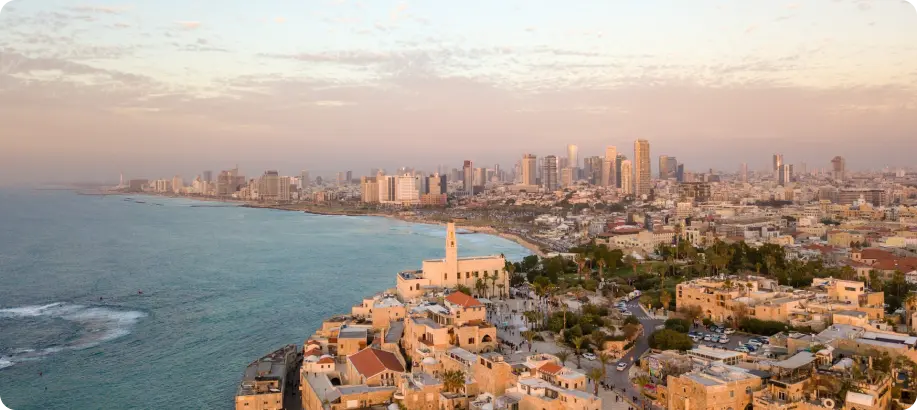
The Coastal Area Management Programme (CAMP) Israel was implemented under the Barcelona Convention to support the introduction of integrated coastal planning and management approaches in a highly developed and densely used coastal zone.
The project covered the entire national coastline (188 km), a narrow and intensively used strip hosting around 70% of the population and concentrating key economic activities, including urban development, industry, transport, tourism and that hosts around 70% of the population and concentrates includes valuable natural assets such as sandy beaches, river mouths, rocky shores, nature reserves and marine protected areas, making it particularly sensitive to development pressures.
CAMP Israel addressed the need to better balance development and environmental protection by strengthening decision-making processes and promoting a more integrated and strategic approach to coastal management.
Key objectives
The project focused on establishing a more coherent basis for managing competing uses and pressures in the coastal zone, while introducing integrated approaches at both coastal and national levels.
In particular, it aimed to:
- promote integrated planning and management across sectors affecting the coastal zone
- strengthen the link between environmental considerations and development decision-making
- improve the management of coastal resources, pressures and risks
- introduce economic and analytical tools to support more informed policy choices
- raise awareness and build capacity for sustainable coastal development
Main results
CAMP Israel delivered a set of complementary analyses, tools and policy-oriented outputs that together strengthened the foundation for integrated coastal management at the national level.
The main results include:
- development of the first National Strategy for Sustainable Development, providing a strategic framework applicable beyond the coastal zone
- improved understanding of coastal and marine processes and pressures, including pollution, coastal erosion, and impacts of infrastructure and human activities
- enhanced approaches to managing coastal resources and hazards, supported by targeted assessments and monitoring tools, including remote sensing
- exploration of economic and regulatory instruments to support the implementation of coastal management policies
- strengthened knowledge base linking environmental dynamics with economic development pressures, enabling more informed and integrated policy formulation
These results contributed to a more holistic approach to coastal management, supporting policy development not only for the coastal zone but also at the national level, and informing follow-up activities focused on awareness-raising, capacity building, and conflict resolution.
Partnership
- Ministry of the Environment
- Institute for the Oceanographic and Limnological Research
- With the support of relevant national institutions
UNEP/MAP – Barcelona Convention system:
- PAP/RAC
- PB/RAC
- SPA/RAC
- ERS/RAC