

Coastal planning
begins here

Towards a resilient and sustainable Medierranean

The challenge

The Mediterranean is warming 20% faster than the global average. Sea levels are rising. Extreme weather events are intensifying. Yet most coastal municipalities still operate without an integrated management plan.


The window to act is narrowing. The damage already visible – eroding beaches, flooded historic towns, collapsing fisheries – is only the beginning. Without integrated coastal planning, it will accelerate.


But there is a tested, legally grounded path forward. The Barcelona Convention gives you the mandate. This toolkit gives you the method. Your coast needs a plan. This is how you build one.

20%

faster warming than global average

46000 km​

total Mediterranean coastline under pressure

72%

of Mediterranean population living in coastal areas

2100

horizon for current coastal planning decisions

What is coastal planning?

What is coastal planning?

This guidance applies to the process of coastal planning in the Mediterranean.

Coastal planning is a continuous process: a structured framework for translating long-term sustainability objectives into near-term decisions, anticipating change and prioritising actions. Coastal planning aligns spatial choices and risk management to reduce future exposure and avoid irreversible development lock-ins. Within that continuous process, a coastal plan is a waypoint, capturing where the community stands, what it has agreed, and the direction it has chosen. The coastal plan is just a milestone on the journey towards a resilient and sustainable future for your coast and its communities.

Coastal planning takes many forms, and at national, regional and local levels:

  • National strategies for Integrated Coastal Zone Management (ICZM) are required by the Protocol on Integrated Coastal Zone Management in the Mediterranean (ICZM Protocol), in particular Section 18.1. PAP/RAC have prepared specific guidance for the preparation of national ICZM strategies which can be downloaded here: National ICZM Strategy Guidelines
  • The ICZM Protocol also enables the planning of the Mediterranean marine areas within the broader scope of coastal planning and management. mandating regional, international and transboundary cooperation. Preparing a Marine Spatial Plan? Visit the Mediterranean MSP Workspace.

This Tool Kit: builds on established legal commitments and decades of Mediterranean practice in coastal planning and management.

Your legal mandates

You are not acting alone or without authority. Every Mediterranean country has signed the
Barcelona Convention and its ICZM Protocol – giving you a legally binding framework that national and local officials can invoke, cite, and use as leverage.

Barcelona convention

The Barcelona Convention (revised 1995) is the overarching legal framework for the Mediterranean. It establishes binding obligations on all 21 contracting parties to protect and sustainably manage the Mediterranean Sea and its coastal zones. All ICZM work derives from this treaty.

ICZM Protocol

The Protocol on Integrated Coastal Zone Management (2008) is legally binding on all signatories - providing a direct mandate for your work.

Sustainable Development Goals

Integrated coastal planning directly delivers on SDG 14 (Life Below Water), SDG 13 (Climate Action), SDG 11 (Sustainable Cities), and SDG 15 (Life on Land). Your ICZM plan is not just a planning document - it is a measurable contribution to national SDG reporting. Framing coastal investment in SDG terms unlocks climate finance, EU funds, and international development support.

National legislation

Many Mediterranean countries have transposed the ICZM Protocol into national spatial planning, environmental, or sectoral legislation. Understanding which national laws apply to your coastal zone - and how they interact with the Protocol - is essential. PAP/RAC maintains country-specific legal profiles for all 21 contracting parties.
What is the Coastal Zone?

What is the Coastal Zone?

The ICZM Protocol for the Mediterranean uniquely defines the coastal zone in spatial terms, emphasising the interdependence of the land and coastal waters. Article 3 of the ICZM Protocol defines the geographical boundary as:

“The seaward limit of the coastal zone shall be the external limit of the territorial sea; and the landward limit shall be the limit of the competent coastal units.”

The maximum seaward limit is the external limit of the territorial sea – relatively straightforward, and unlikely to need reduction.

The landward limit is less straightforward. The type and nature of “competent” coastal units varies greatly around the Mediterranean – in geographical scale (from small municipalities to extensive counties and regions) and in their functions, competencies and capacities. The common identifying element is that all border the sea.

The ICZM plan boundary should conform to or fall within these Protocol limits. The geographical scale cannot be predefined – one or more of the following should determine it:

National guidance or allocation of responsibilities to individual administrations, regions or municipalities

Bottom-up initiatives from individual or groups of coastal administrations

Physical nature of the area and its landscape

Local and traditional perceptions of the coastal area or its issues

Functional areas sharing common infrastructure, transport and access

The marine area should always be included

Where do you stand?

Rate your situation honestly across six dimensions. Drag each slider from red (not in place) to green (fully established). Your coast faces real challenges – but resilient coastal planning starts here. Begin with Step 1: build a mandate, name a lead, and start the conversation. Momentum is everything.

Mandat politique

Aucun mandat ni processus n’existe.

0
Aucun Partiel Complet

Équipe dédiée

Aucune équipe n’a été désignée

0
Aucun Partiel Complet

Financement assuré

Aucun budget n’existe

0
Aucun Partiel Complet

Confiance des parties prenantes

Opposition active ou absence de contact

0
Aucun Partiel Complet

Données côtières

Peu ou pas de données pertinentes disponibles

0
Aucun Partiel Complet

Cadre juridique

Aucune base juridique

0
Aucun Partiel Complet

5 steps: One coastal planning process

Lorem ipsum dolor sit amet, consectetur adipiscing elit. Ut et massa mi. Aliquam in hendrerit urna.

01

Initiate the process

“Fools rush in where angels fear to tread”

- Alexander Pope, 1711

Establish political commitment, identify your lead agency, form a core team, and draft terms of reference. Secure even a small budget to demonstrate seriousness. Map existing policies and stakeholders who must be involved from day one.
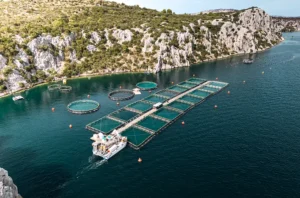
Relier les pays grâce à la coopération régionale
02

Map the present and the future

““The future depends on what you do today””

- Mahatma Gandhi

The overall aim of the Map the Present and the Future step is to add substance to the issues and aspirations initially identified in the preceding step – making the invisible visible and engaging stakeholders in the search for outcomes.

03

Build a shared vision

“"We are limited, not by our abilities, but by our vision."”

- Khalil Gibran

A central purpose of coastal planning is to translate the ICZM Protocol’s overarching vision into shared, place-based aspirations that can be expressed through tangible actions and deliver practical, sustainable outcomes.

04

Design the future- a living coastal plan

“"The greatest danger is not that our aim is too high and we miss it, but that it is too low and we reach it." ”

- Various attributions

The ambition here is to develop a living Coastal Plan, a plan that is flexible and regularly updated, a plan that adapts to new information, changing environmental conditions, and community needs, rather than remaining fixed. In short, it’s a dynamic plan that evolves over time and with the community it serves. Your living Coastal Plan should be locally grounded, participatory, and adaptable - your living Coastal Plan becomes effective when it is created with people, not for them.
05

Put it into action

“"Action without vision is only passing time, vision without action is merely daydreaming, but vision with action can change the world.” ”

- Nelson Mandela

This is the culmination of the coastal planning process. This is the point at which the partners in the planning process move from agreement of the measures to be included the Action Plan to prioritising, resourcing, and implementing concrete actions. Sustainable development as business as usual The ultimate goal of your Action Plan is to move from a push model - where progress depends on continuous driving, coordination, and pressure from your Coastal Plan proponents - to a pull model, where the process is naturally taken up and sustained by the coastal society itself. At this point, sustainable development becomes “business as usual” - embedded in everyday systems, resilient to change, and no longer dependent on exceptional leadership or external stimulus.

Secure political mandate

Secure political mandate

Obtain a formal political commitment if not already in place: ministerial decree, council resolution, or adopted strategy. Name the lead body and assign responsibilities.

Appoint a lead organisation

Appoint a lead organisation

Identify who has ultimate legal and financial responsibility for the coastal planning process. Ensure the body has appropriate capacity, resources, flexibility, and institutional patience.

Define and agree Coastal Plan Boundaries

Define and agree coastal planning Boundaries

The ICZM Protocol for the Mediterranean uniquely defines the coastal zone in spatial terms, emphasising the interdependence of the land and coastal waters.

Identify funding sources

Identify funding sources

Identify funding sources for coastal planning. Identify potential financing sources and institutional arrangements to implement future actions.

Establish governance structure

Establish governance structure

Agree and set up the Steering Committee. Other bodies may include an Advisory Body, and consultative group(s); agree their purpose and remit, reporting structure meeting frequency, and accountability.

Form a core team

Form a core team

Assemble an inter-departmental team (typically 3-8 people) with appropriate environmental, planning, legal, community and finance expertise. Set Terms of Reference.

Prepare an Inception Report

Prepare an Inception Report

Produce the roadmap for the planning process: geographic scope, vision, governance structure, staffing, funding sources, timeline, and risk analysis.

Collective Agreement

Collective Agreement

Agree and sign a formal statement of shared purpose among core partners: a Mission Statement, MoU, or equivalent. Obtain sign-off.

Prepare a Scoping Report

Prepare a Scoping Report

Map the likely range of human and natural forces, existing sectoral policies, and their potential interrelationships. This is your prospectus for the coastal planning.

Develop a Communication & Engagement Strategy

Develop a Communication & Engagement Strategy

Establish branding and identity, identify your community and stakeholders, appoint moderators, and set measurable engagement targets.

Map stakeholders

Map stakeholders

Identify all those who manage, influence, use, or depend on the coastal zone. Share the preliminary stakeholder list for validation before invitations are sent.

Key milestone outputs & outcomes

Formal political mandate in place
Lead organisation named with clear accountability
Funding agreement(s) in place and signed off
Steering Committee formed and inaugural meeting held. Advisory Body, and consultative group(s) ToR and membership agreed.
Core team established with agreed terms of reference
Inception Report completed and endorsed
Collective Agreement signed by core partners
Scoping Report completed
Communication & Engagement Strategy adopted
Initial stakeholder map validated

Conduct a Coastal Vulnerability Assessment (CVA)

Map risk areas (erosion, flooding, fires, salinisation), climate projections, sensitive ecosystems, exposed urban areas, and socio-economic dynamics. Use best available data - not perfect data.

Analyse Land-Sea Interactions (LSI)

Identify the natural and human-induced processes crossing the land–sea boundary. Apply the tested 14-step LSI approach from the PAP/RAC Marine Spatial Planning Platform.

Capture the lived experience of the local community

Document recent events, local perceptions of risk, traditional knowledge, and the social, economic, and cultural dynamics of the coastal community. Include gender and social vulnerability analysis.

Develop scenarios for the future

Use the Climagine participatory methodology to generate "what if?" visions of the future with stakeholders.

Assess AI and remote sensing opportunities

Evaluate how remote sensing, GIS, and AI tools can support monitoring of shoreline change, erosion, ecosystems, and human activity - while recognising their limitations.

Define sustainability indicators and indicators to measure success

Select SMART sustainability indicators (Specific, Measurable, Achievable, Realistic, Time-bound) for each sustainability dimension.

Synthesise the evidence base into a single Diagnostic Analysis

Synthesise CVA, LSI analysis, community knowledge, and scenario work into a coherent evidence base that is fit for purpose and accessible to a non-specialist audience .The analysis should clearly outline the current state and future trends Complete the indicator framework..

Key milestone outputs & outcomes

Coastal Vulnerability Assessment completed
Land-Sea Interactions mapped and analysed
Community lived experience documented, including gender analysis
Future scenarios developed and tested with stakeholders
Monitoring and data gaps identified and addressed where feasible
Define sustainability indicators and indicators to measure success
Synthesise the evidence base into a single Diagnostic Analysis

Achieve consensus on key problems and priorities

Run participatory workshops using the Climagine methodology. Engage diverse stakeholders; communities, sectors, neighbouring authorities - in a structured process of shared diagnosis.

Develop the Vision Statement

Co-create a single long-term Vision Statement (20–30 year horizon) that is both rational and inventive: rooted in what is known, shaped by what is wanted, and bounded by what is possible.

Key milestone outputs & outcomes

Consensus reached on key coastal challenges and priorities
Vision Statement agreed and formally adopted by partners
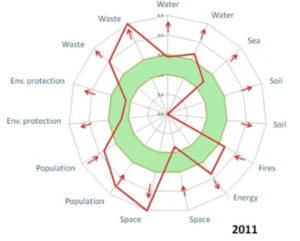
Amoeba diagrams produced for past, present, and projected future

Define the Coastal Plan measures

Your living Coastal Plan will consist of a unique range of measures tailored to the needs of your Coastal Plan area - its environment, its economy, its society and culture. The measures in a Coastal Plan can be grouped into three types: Societal, Blue-Green, and Grey/Hybrid which, together provide an integrated framework to improve climate resilience and sustainable development for the coastal zones of the Mediterranean. The three categories are divided into three separate Tasks below; Tasks 1a, 1b, 1c.

Define Blue-Green measures (Nature-based Solutions)

Identify ecosystem-based measures: wetland and dune protection, Posidonia seagrass restoration, marine protected areas, river and floodplain restoration, urban green infrastructure, and sustainable agriculture.

Define Grey and Hybrid measures

Where nature-based solutions are insufficient, identify hard engineering options: seawalls, groynes, beach nourishment, storm surge barriers. Design hybrid solutions combining grey and blue-green approaches.

Develop a financing strategy

Identify funding sources (EU Cohesion Funds, GEF, Green Climate Fund, INTERREG MED, national budgets, private finance). Design co-financing and blended finance mechanisms.

Obtain formal approval

Allow time and resources to achieve political approval. Use the approval process as an opportunity to elevate the plan's status; public launch events, ministerial forewords, and formal adoption statements build institutional commitment.

Key milestone outputs & outcomes

Living Coastal Plan document completed with Societal, Blue-Green, and Grey measures
Measures spatially located and time-phased
Financing strategy developed with identified sources for each measure
Formal political approval obtained
Plan publicly launched and disseminated

Establish governance for effective delivery

Redesign governance arrangements for implementation. Delivery governance differs from plan preparation. Embed coastal planning firmly in local institutional and social structures, designed for the long term.

Prioritisation

The goal here is to ensure that time, money, and human capital are directed toward effective, feasible, and equitable delivery of the measures in the coastal plan. The key message here is that effective implementation depends on simple, transparent prioritisation of outcomes.

Phasing - resilience in the face of uncertainty

The Action Plan should be a living document, kept under regular (annual) review to reflect uncertain and changing conditions. Typically, the Action Plan will look forward over a 5–10-year period and beyond for implementation, but with an indicative schedule of individual actions extending to 20-25 years.

Progress

Measuring and monitoring your progress is essential to ensure that coastal planning moves from vision to effective action and - most importantly - results. Conventional approaches describe indicators and milestones as measures of progress in the delivery of coastal plans. However, in an uncertain world and the changing conditions, it is necessary to mark moments - tipping or trigger points - when an existing policy, measure, or pathway can no longer meet agreed objectives

Implement pilot actions

Implement pilot actions

Report publicly on progress

Maintain transparency through public reporting. Share results - including what has not worked. Transparency builds trust and sustains political support across electoral cycles.

Review and update as a living document

Conduct formal plan reviews every 5–10 years, or earlier if tipping or trigger points are reached. Adapt priorities, governance, and measures in response to changing conditions and new evidence.

Key milestone outputs & outcomes

Delivery governance structure established and operational
Action Plan completed, prioritised, and formally adopted
Pilot actions underway and publicly communicated
Monitoring system established with agreed indicators and review cycles
First public progress report published
Plan formally reviewed and updated on agreed schedule