Key objectives
The CoLD Project had the objective to improve Lebanese and Syrian national capacities relying on advanced tools for environmental management and planning of coastal zones, according to the principles of sustainable development. The main objectives were the following:
- Prepare a diagnostic analysis of the human impacts causing land degradation
- Characterisation of the study area by identifying stable non-erosion affected areas and unstable erosion-affected areas
- Prepare a strategy and recommendations, supported by GIS and with an active public participation programme
- Implement pilot projects, namely: the Damour river watershed and the Zahrani watershed (Lebanon), and areas of Kurdaha and Sheikh Bader (Syria).
Main results
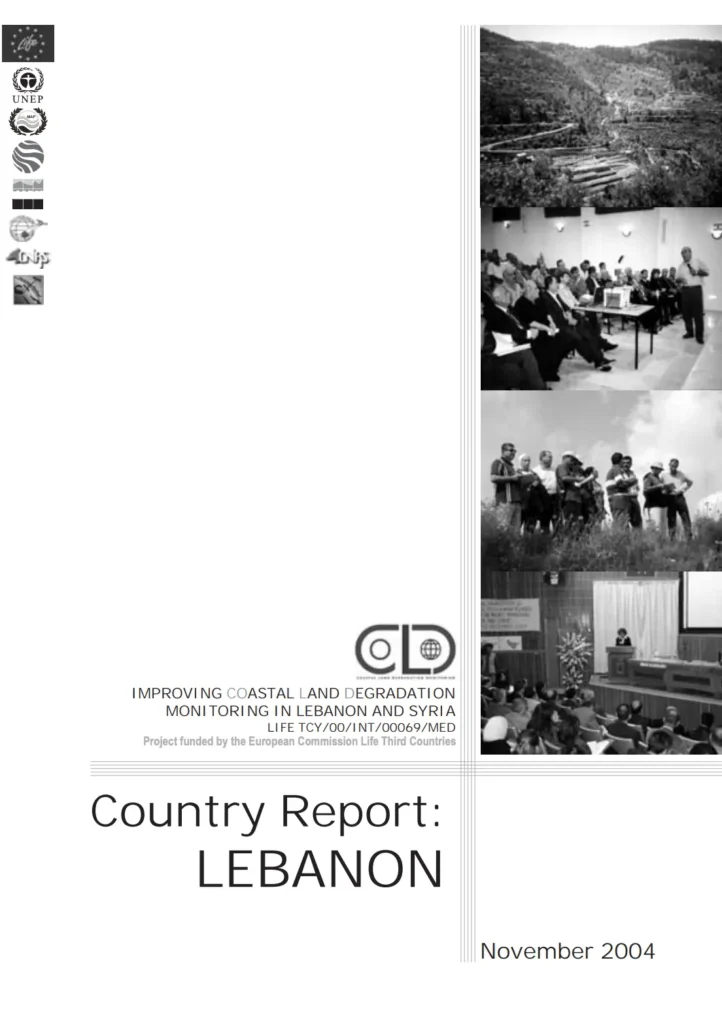
Country reports were prepared for Lebanon and Syria. The Lebanon report includes detailed plans for the Damour River watershed and the Zahrani watershed, while the Syria report presents detailed plans for the pilot areas of Kurdaha and Sheikh Bader.
These represent the first coastal adaptation plans addressing climate change in erosion-prone areas. The plans are based on comprehensive analyses of coastal erosion processes resulting from natural characteristics, as well as land degradation caused by human interventions and unsustainable practices. Management proposals, including adaptation and remedial measures, the majority of which are Nature-based solutions, were developed and prioritized according to area-specific needs and vulnerability levels.
Role of PAP/RAC
- Provide guidance and technical support to national teams
- Training of national experts on the application of the Guidelines for mapping and measurement of rainfall-induced erosion processes in the Mediterranean coastal areas, and related Photo-library on soil erosion processes
Partnership
Lead partner:
UNEP/MAP Environment Remote Sensing Regional Activity Centre (ERS/RAC), Italy
Partners:
Priority Actions Programme Regional Activity Centre (PAP/RAC), Croatia
National Centre for Remote Sensing (NCRS), Lebanon
General Organisation for Remote Sensing (GORS), Syria