Project overview
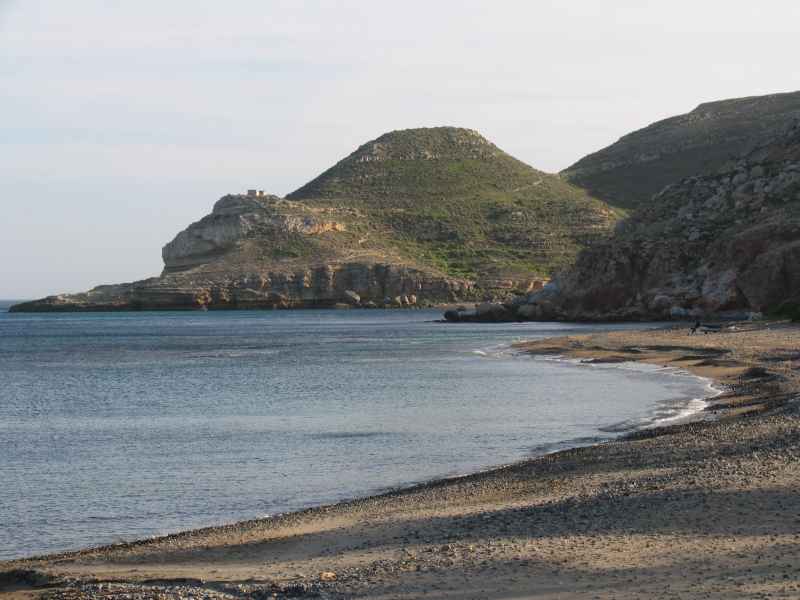
CAMP Spain was located on the southeast coast. The project covered over 219,000 hectares in the province of Almería, including both land (148,000 ha) and marine (71,000 ha) areas. It involved eight municipalities — Pulpí, Cuevas de Almanzora, Vera, Garrucha, Mojácar, Carboneras, Níjar, and Almería — with flexibility to engage nearby inland areas to address cross-cutting issues like water management, pollution, and planning. The main challenges of the area that the project responded to were of governance and environmental nature:
- Weak coordination among government bodies
- Fragmented responsibilities across administrative levels
- Lack of public participation in coastal planning
- Difficulty integrating sustainability into sectoral policies (e.g., agriculture, tourism, urban development)
Key objectives
CAMP Levante de Almería aimed to:
- Strengthen institutional coordination among national, regional, and local authorities
- Ensure integration of environmental and sectoral policies
- Increase public participation and awareness
- Build capacity across institutions, sectors, and communities
- Promote sustainable development in key economic sectors
- Conserve natural and cultural resources
Results and outputs
Among the key results, this CAMP provided the strategic document “Sustainable Development Reference Framework” (SDRF) and established a governance framework composed of the Coastal Council, Coastal Commission, and Coastal Forum. All supported by several technical proposals for integrated coastal planning of the use of natural resources, as well as by a plethora of training, capacity building and awareness raising sessions.
The CAMP led to a proposal for a strong, well-functioning model for institutional collaboration and participatory governance; the adoption of a strategic document, “The Sustainable Development Reference Framework” as a guide for future policies in line with the ICZM Protocol, and received recognition as a European model of coastal planning, combining technical quality with inclusive governance.
Follow-up
The CAMP results — especially the SDRF and governance model — provided a solid foundation for long-term coastal planning. The outcomes served as a demonstration case for applying integrated coastal zone management (ICZM) principles in other regions of Spain and the wider Mediterranean.