Project overview
The Coastal Area Management Programme (CAMP) Sfax was implemented under the Barcelona Convention to support integrated coastal area management in one of Tunisia’s most important industrial and urban coastal zones.
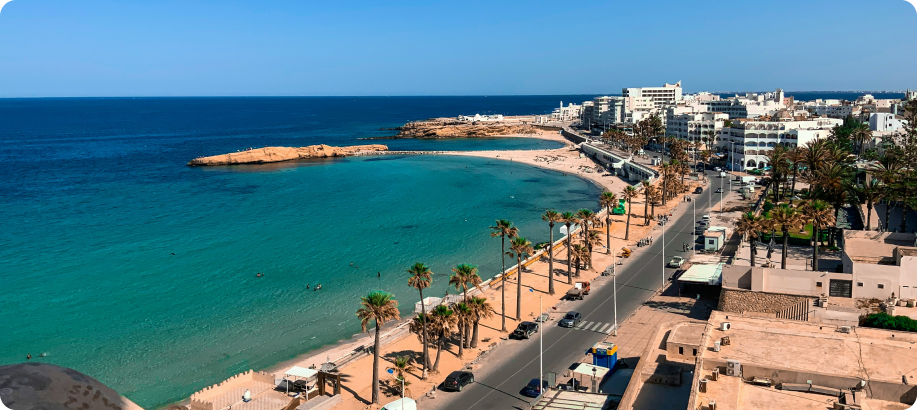
The project covered the city of Sfax and its wider metropolitan area (Big Sfax), located on the northern shore of the Gulf of Gabes, including the adjacent shallow marine area extending towards the Kerkennah Islands. The area is characterised by intensive industrial activity, rapid urban growth and a highly vulnerable marine environment, where limited water circulation exacerbates pollution impacts.
The project aimed to address severe environmental degradation resulting from uncontrolled industrial and urban development, while introducing integrated planning approaches to improve environmental management and guide more sustainable development.
Key objectives
Building on this context, CAMP Sfax focused on establishing a basis for integrated management of coastal, urban and marine systems, addressing both environmental pressures and development needs.
The project was guided by the following key objectives:
- reduce pollution from industrial, urban and agricultural sources affecting the coastal and marine environment
- improve management of water resources and solid and liquid waste
- support integrated urban and coastal planning processes
- strengthen protection of environmentally sensitive areas and cultural heritage
- introduce planning tools, data systems and analytical approaches to support decision-making
Main results
The main results include:
- Support for integrated planning and environmental management, including:
- preparation of integrated management plans for Big Sfax and a detailed development plan for Sfax-South
- development of prospective studies with environment–development scenarios supporting a shift towards more controlled and sustainable development
- introduction of planning frameworks addressing water resources and solid and liquid waste management
- Strengthened knowledge base and environmental assessment, including:
- inventory of pollution sources and analysis of industrial, urban and marine pollution
- development of a GIS database supporting integrated analysis and planning
- studies addressing climate change impacts, protected areas and coastal vulnerabilities
- Strategic and operational measures, including:
- proposals for restructuring industrial development and introducing pollution control measures
- recommendations for improving urban infrastructure, wastewater treatment and waste management systems
- measures for protection of groundwater resources and rehabilitation of degraded coastal areas
- identification of priority actions for phased implementation, including relocation of highly polluting activities and restoration of affected sites
The project established a foundation for long-term environmental management and integrated urban and coastal planning, supported by follow-up actions including feasibility studies and prioritised interventions.
Partnership
- Ministry of the Environment and Territorial Planning
- National Agency for Environmental Protection
- With the support of relevant national institutions
UNEP/MAP – Barcelona Convention system:
- PAP/RAC
- SPA/RAC
- ERS/RAC
- REMPEC
- MEDPOL