Focus areas​

Addressing the key environmental and development challenges shaping Mediterranean coastal and marine zones​

Our work focuses on coastal, marine, climate, and nature considerations, brought together within a single framework that guides our priority actions.​

Together, these provide a clear understanding of how coastal and marine ecosystems evolve and help explain the dynamics shaping the Mediterranean coasts.

Coast

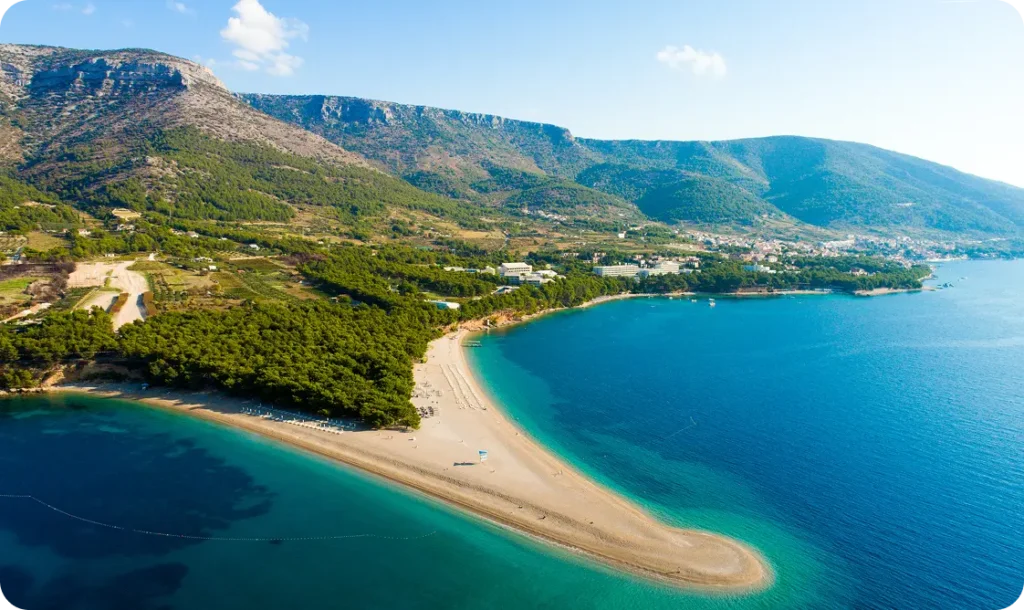
Aerial view of a curved sandy beach reaching into the turquoise Adriatic Sea, backed by green hills.

Mediterranean coasts are among the most pressured and diverse areas of the region. Rapid urban growth, tourism expansion, and infrastructure development continue to transform coastal landscapes, fragmenting natural habitats and placing increasing strain on ecosystems. These changes reduce the capacity of coastal zones to provide essential environmental services, while also altering their distinctive landscape character.

Tackling these challenges requires more coherent approaches to coastal development. The ICZM Protocol promotes integrated management of coastal areas by limiting excessive construction along the shoreline with the introduction of setback zones, containing urban sprawl, and preserving open coastal areas that maintain ecological connectivity and landscape continuity. By recognising the coast as a shared and limited resource, it encourages development patterns that balance economic use, public access, and the protection of coastal ecosystems and landscapes.

Sea

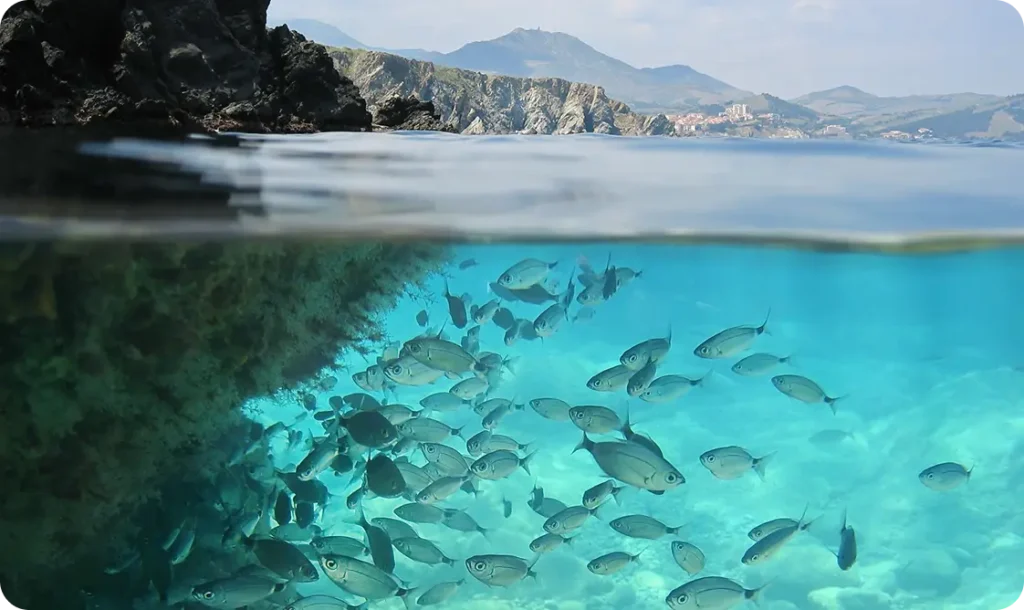
A school of fish swimming in clear turquoise water along a rocky coastline.

Marine space supports a wide range of activities essential to coastal economies and livelihoods, including fisheries, aquaculture, maritime transport, coastal and maritime tourism, offshore renewables, and other blue economy sectors across the Mediterranean.

As these activities evolve and diversify, they place increasing pressure on marine ecosystems and resources, particularly in areas where uses overlap or compete for space. This calls for careful coordination to ensure that shipping routes, fishing grounds, maritime tourism zones, and offshore energy developments remain compatible with the conservation needs and ecological limits of the marine environment.

Ensuring long-term sustainability requires recognising the sea as a shared and interconnected system. In this context, the sustainable blue economy in the Mediterranean depends on balancing economic development with the protection of marine ecosystems, applying climate-smart and ecosystem-based approaches, addressing cumulative pressures and land-sea interactions, and underpinning decision-making through continuous monitoring and assessments of the marine environment. This approach supports the responsible use of marine resources while maintaining the health and productivity of Mediterranean marine ecosystems.

Climate

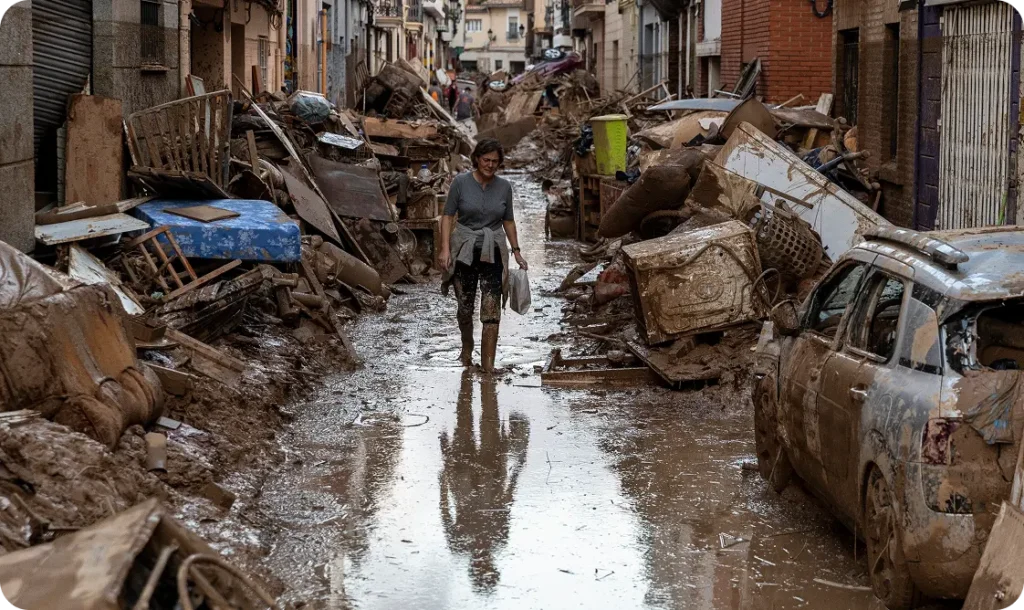
A person walking through a flooded street filled with mud, debris and storm-damaged cars.

The Mediterranean region is widely recognised as a climate change hotspot, experiencing warming and environmental pressures above the global average.

Rising sea levels, coastal erosion, more frequent extreme weather events, and increasing temperatures are transforming coastal zones and marine ecosystems. At the same time, shifting precipitation patterns and growing water scarcity add further stress to coastal communities, wetlands, and freshwater resources. Increasing temperatures and increasingly hot and dry conditions are intensifying wildfire risks.

Integrating climate considerations into the coastal and marine systems management is key to addressing these impacts. Integrated planning serves as a strategic framework to guide management, enabling the systematic consideration of climate and environmental risks while balancing ecosystem protection with development pressures within coastal territories. It supports a shift from reactive to anticipatory, coordinated action, strengthens decision-making, and fosters collaboration, partnerships, and trust among stakeholders.

Adaptation measures range from restoring natural systems, including wetlands and dunes as key buffers, through nature-based solutions (NbS), to strengthening community resilience through improved governance and coordination.

Nature

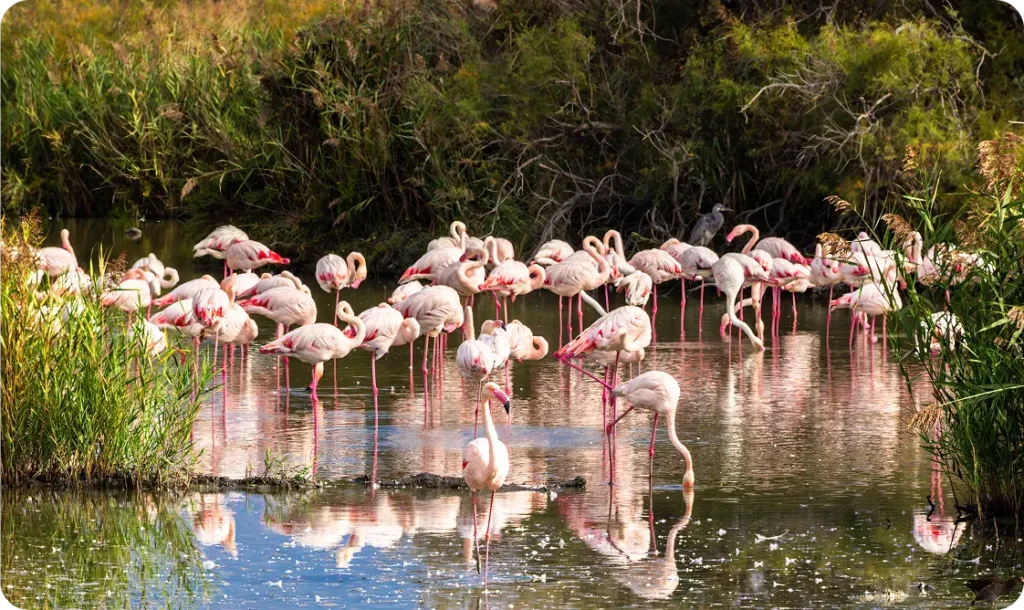
A flock of pink flamingos wading in a shallow coastal wetland surrounded by green reeds.

Coastal ecosystems support rich biodiversity and provide essential services for local communities.

Wetlands, lagoons, dunes, and beach systems regulate water flows, store carbon, support habitats, and protect the coast from erosion and flooding. Their health depends on the functioning of freshwater systems that connect inland water resources with coastal and marine environments.

Safeguarding these natural systems requires understanding the close links between water management, coastal ecosystems, and biodiversity conservation. Protecting wetlands, maintaining natural water flows, and preserving beach and dune systems are essential for sustaining the ecological functions, with nature-based solutions playing a crucial role.

Featured publications

Explore key reports, guidelines and knowledge products that support sustainable coastal and marine management