Advancing ICZM across the Mediterranean requires both regional coherence and strong national commitment
Under Article 18 of the ICZM Protocol of the Barcelona Convention, Parties are required to formulate and implement national ICZM strategies, plans and programmes that define long-term objectives, priorities and coordination mechanisms for sustainable coastal development.
At the same time, the Protocol requires a coordinated regional approach, operationalised through the Common Regional Framework for Integrated Coastal Zone Management, adopted under the Barcelona Convention. This Framework functions as a regional ICZM strategy, providing a shared reference with common objectives, guiding principles and priority actions to support coherent and consistent implementation across the Mediterranean, while allowing adaptation to national contexts.
Building on this legal framework, PAP/RAC provides tailored technical assistance, methodological guidance and capacity-building to help countries design participatory, science-based ICZM strategies. These frameworks align national development priorities with environmental protection, climate adaptation, and the sustainable blue economy.
PAP/RAC’s approach provides direct support to ministries and coastal authorities in drafting ICZM strategies, strengthening inter-ministerial coordination, integrating climate change adaptation and ecosystem-based approaches, and embedding coastal management into broader spatial planning systems.
PAP/RAC provides guidelines for national ICZM strategies and assists Mediterranean countries in preparing them based on their national needs and obligations.
In 2012, the Algerian government launched its National ICZM Strategy under the supervision of a dedicated inter-ministerial committee. This large participatory process involved more than 1,400 stakeholders, contributing to the development of a shared vision for the country’s coastal future
View the strategyAdopted in 2015, Montenegro’s ICZM Strategy established a strategic framework for applying ICZM principles into spatial planning, providing detailed recommendations for the preparation of the Coastal Area Spatial Plan.
View the strategyThe Croatian Ministry of Environmental and Nature Protection led the preparation of the National Coastal and Marine Strategy. PAP/RAC supported the process by facilitating the first economic and social assessment of the sea and coast, and by assisting in the preparation of the Strategy’s Programme of Measures aligned with the EU Marine Strategy Framework Directive, Integrated Monitoring and Assessment Programme (IMAP) and to the ICZM Protocol for the Mediterranean.
View the strategyPAP/RAC has been a longstanding supporter of Lebanon, collaborating for many years to identify priorities and support the development of solutions for effective coastal management. As one of the most densely populated coastal zones of the Mediterranean, Lebanon’s coast faces significant development pressure, reflected in some of the highest coastal build-up ratios in the region.
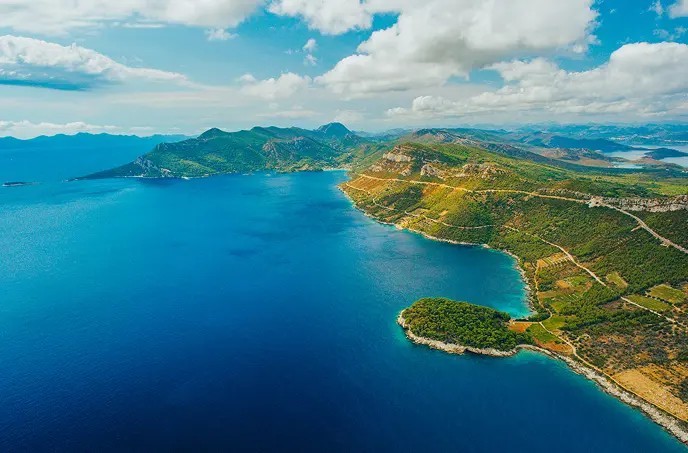
These pressures are compounded by a complex socio-economic context. Lebanon currently hosts one of the highest numbers of refugees per capita worldwide, while also facing one of the most severe economic crises in recent history.
The development of the new National ICZM Strategy and of the accompanying draft ICZM Law represents a critical opportunity for Lebanon to strengthen coastal governance and establish mechanisms, tools and policy commitments needed to advance sustainable coastal management. Prepared under the GEF-funded MedProgramme, the strategy is expected to be completed by mid-2026.

Explore key reports, guidelines and knowledge products that support sustainable coastal and marine management