
Partnership
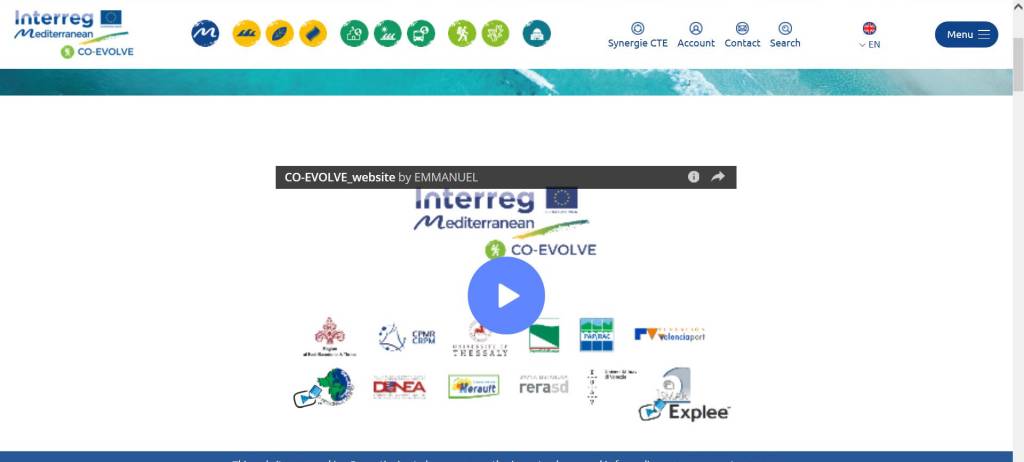
- Region of East Macedonia and Thrace
- Regione Emilia-Romagna
- Po Delta Veneto
- Port of Valencia
- Hérault Department
- RERA SD
- DUNEA
- UNEP/MAP Priority Actions Programme Regional Activity Centre (PAP/RAC)
- REMTH and other regional and institutional partners
Key objectives
CO-EVOLVE aimed to strengthen the sustainability of coastal and maritime tourism by improving understanding, planning and cooperation across the Mediterranean.
In particular, it aimed to:
- analyse threats and enabling factors for sustainable tourism at the Mediterranean scale
- promote ICZM/MSP-based approaches to tourism planning
- support the development of sustainable tourism strategies in pilot areas
- improve coordination between sectors and governance levels
- enhance the use of tools, indicators and methodologies for assessing tourism sustainability
- strengthen cooperation and knowledge transfer across the region
Main results
CO-EVOLVE generated a comprehensive analytical and practical basis for improving the sustainability of tourism in Mediterranean coastal areas.
The main results include:
- Mediterranean-scale analysis of threats and enabling factors for sustainable tourism development
- development and testing of ICZM/MSP-based tourism planning approaches in pilot areas
- preparation of tourism-driven action plans integrating environmental, social and economic considerations
- application and adaptation of the European Tourism Indicators System (ETIS) to assess sustainability
- strengthened cooperation and knowledge exchange across regions and initiatives
- development of transferability plans supporting replication of results at regional and Mediterranean scales
Role of PAP/RAC
Within the CO-EVOLVE project, PAP/RAC played a central role across multiple components, contributing to both analytical and implementation phases.
In particular, PAP/RAC contributed to key outputs on governance and enabling factors for sustainable tourism, including leading the synthesis of enabling factors and preparing analytical reports. It also coordinated capacity-building activities, including training programmes based on ICZM/MSP approaches, and supported pilot areas through advisory inputs.
PAP/RAC further led the transferability component of the project, ensuring that results were effectively disseminated and adapted beyond pilot areas, both at regional and Mediterranean scales. In addition, it contributed to awareness-raising through the organisation of regional events, including Coast Day.
Through these contributions, PAP/RAC supported the application of ICZM/MSP principles to tourism planning and helped establish a practical basis for integrating sustainability considerations into coastal and maritime tourism development across the Mediterranean.