Key objectives
- analyse knowledge generated by Italy-Croatia programme projects and identify key climate change impacts on Adriatic coastal systems
- highlight successful response strategies and good practice examples for climate adaptation
- improve cross-border knowledge exchange and cooperation among institutions and stakeholders
- promote integrated planning approaches that consider physical, geomorphological, ecological, and socio-economic dimensions of climate change impacts
- identify remaining challenges and opportunities for strengthening climate resilience across the cooperation area
Main results
- an online tool providing access to consolidated knowledge and project results
- a good practice handbook presenting effective climate adaptation solutions from across the Adriatic region
- “Thursday CREATivE Talks”, a webinar series enabling knowledge exchange among experts and stakeholders
- conferences and governance workshops showcasing successful implementation examples and facilitating stakeholder dialogue
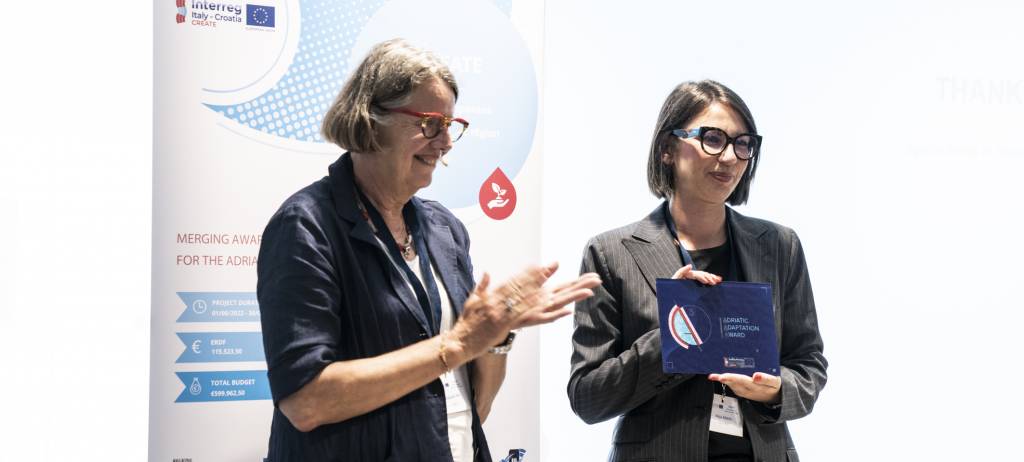
- dissemination activities, including site visits, stakeholder exchanges, and the A3 adaptation award, highlighting innovative adaptation practices in the region
- recommendations for future action aimed at strengthening climate adaptation efforts across the cooperation area
Partnership
Lead partner:
Euro-Mediterranean Center on Climate Change – CMCC (Italy)
Project partners:
- IUAV University of Venice (Italy)
- National Research Council – CNR-ISMAR (Italy)
- Energy Institute Hrvoje Požar (Croatia)
- Abruzzo region (Italy)
- PAP/RAC
- Institute of Oceanography and Fisheries (Croatia)
- Split-Dalmatia County (Croatia)
Role of PAP/RAC
PAP/RAC contributed to the dissemination and transfer of project results across the Mediterranean through its network within the UNEP/MAP system. This enabled the sharing of CREATE outcomes with other Mediterranean countries and facilitated knowledge exchange with related initiatives, including the GEF MedProgramme.
Within the project, PAP/RAC led Work Package 2 (Communication activities), a core component of the project focused on communicating results, promoting climate adaptation knowledge and engaging regional and local stakeholders.