Project overview
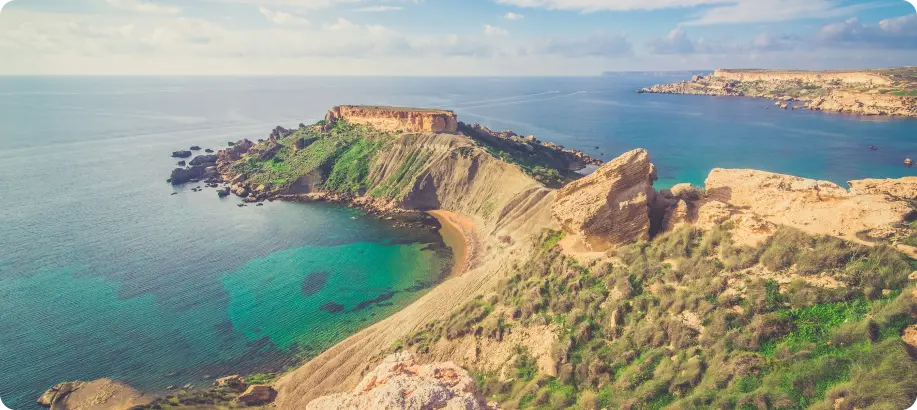
CAMP Malta was the first integrated coastal area management initiative implemented within the Maltese Islands under the UNEP/MAP Coastal Area Management Programme initiative. The project focused on supporting sustainable coastal development and environmental protection, with particular attention to the northwest area of Malta, where pressures from tourism, urbanisation, water management, and land degradation were especially significant.
The project was designed as a multidisciplinary programme combining thematic studies, spatial planning tools, environmental assessments, and participatory approaches. It introduced Integrated Coastal and Marine Area Management (ICAM) methodologies and supported the development of strategies and action plans for long-term coastal sustainability.
Key objectives
Building on the diagnostic analysis and national priorities, the project enabled an integrated assessment of environmental and development challenges in Malta:
- contribute to sustainable management and environmental protection of coastal and marine resources in Malta
- apply ICAM methodologies and tools
- develop strategies and action plans for sustainable development in northwest Malta
- improve understanding of erosion, land degradation, pollution, and coastal ecosystem pressures
- strengthen institutional and technical capacities for coastal management
- introduce GIS, environmental assessment tools, and sustainability analysis methodologies
- promote public participation and stakeholder involvement in coastal planning
- support the wider application of project experiences at national and regional levels
Main results
- integrated planning: prepared integrated coastal management studies and action-oriented planning tools for Malta and the northwest coastal area.
- environmental management: improved knowledge of erosion processes, coastal ecosystems, pollution pressures, and resource management needs.
- innovation: introduced new methodologies including Strategic Environmental Assessment, erosion mapping, marine habitat classification, and sustainability analysis tools.
- data management: developed integrated databases and GIS systems to support coastal planning and decision-making.
- stakeholder engagement: strengthened cooperation between public authorities, local councils, NGOs, and scientific institutions through participatory planning processes.
Follow-up
CAMP Malta represented a milestone for integrated coastal management in the Maltese Islands and became one of the first CAMP projects implemented under the updated conceptual framework adopted by UNEP/MAP. The project demonstrated the importance of combining environmental protection, spatial planning, tourism management, and public participation within a single coastal management framework.
The methodologies and experiences developed through CAMP Malta contributed to the broader implementation of ICZM principles in Malta and supported future regional cooperation initiatives within the Mediterranean Action Plan framework.
Partnership
- Environment Protection Department, Malta
- Ministry for Economic Services, Malta
- Planning Authority, Malta
- Water Services Corporation
- University of Malta
- National Statistics Office
- Local councils and environmental NGOs, including Nature Trust Malta
- UNEP/MAP – Barcelona Convention system:
- PAP/RAC
- MEDPOL
- MAP Coordinating Unit
- European and regional partner institutions