Project overview
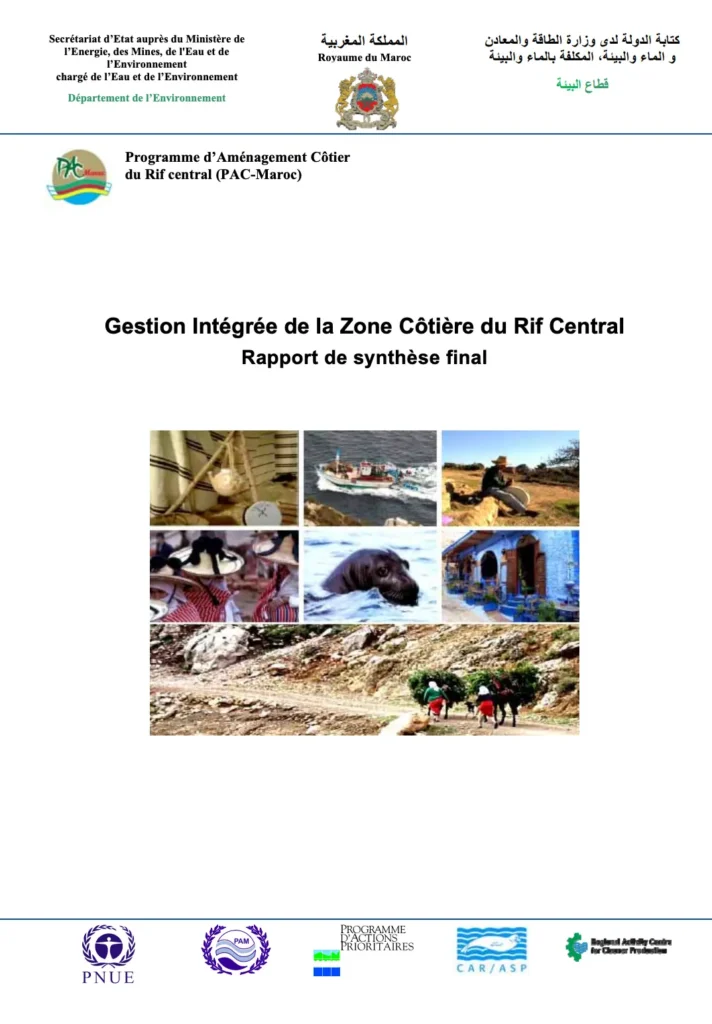
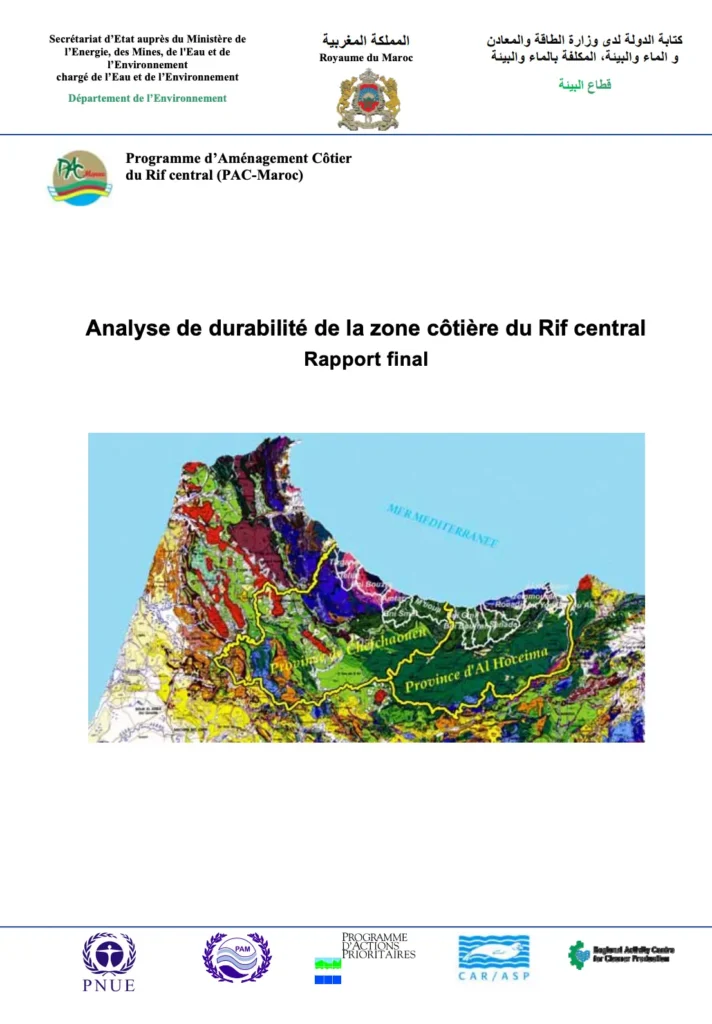
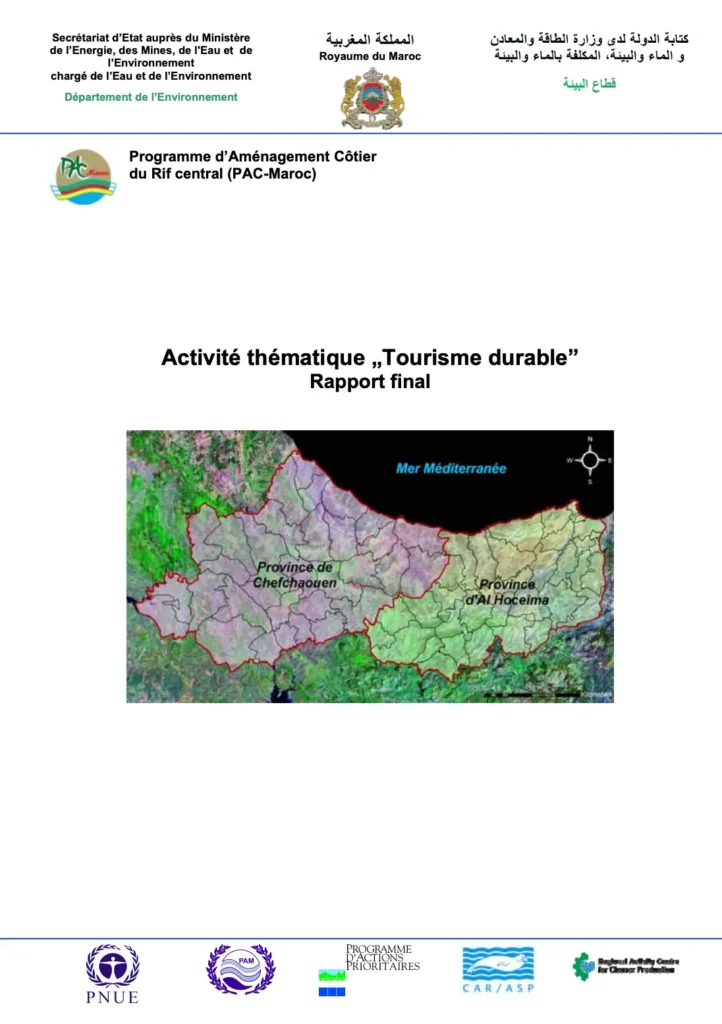
The CAMP Morocco – The Central Rif project was implemented under the Mediterranean Action Plan of the Barcelona Convention to support the Government of Morocco in applying ICZM principles in the Central Rif coastal area.
The project addressed the increasing pressures on the Moroccan Mediterranean coast stemming from rapid urbanisation, tourism development, environmental degradation, and climate-related risks. CAMP Morocco aimed to strengthen coastal governance and support sustainable territorial development by integrating environmental protection, economic activities and spatial planning.
Particular emphasis was placed on developing practical planning tools, improving institutional coordination and supporting the implementation of integrated coastal management approaches that could be replicated in other Moroccan coastal regions.
The project also contributed to strengthening national capacities and provided important inputs for the development of coastal management policies and planning instruments in Morocco.
Key objectives
CAMP Morocco – The Central Rif focused on improving coastal governance and management to:
- introduce and test ICZM approaches in the Central Rif coastal area
- support sustainable coastal development while balancing economic activities and environmental protection
- strengthen coordination among institutions responsible for coastal management
- develop practical tools and methodologies for coastal planning and management
- enhance national and local capacities for long-term coastal governance and integrated planning
Main results
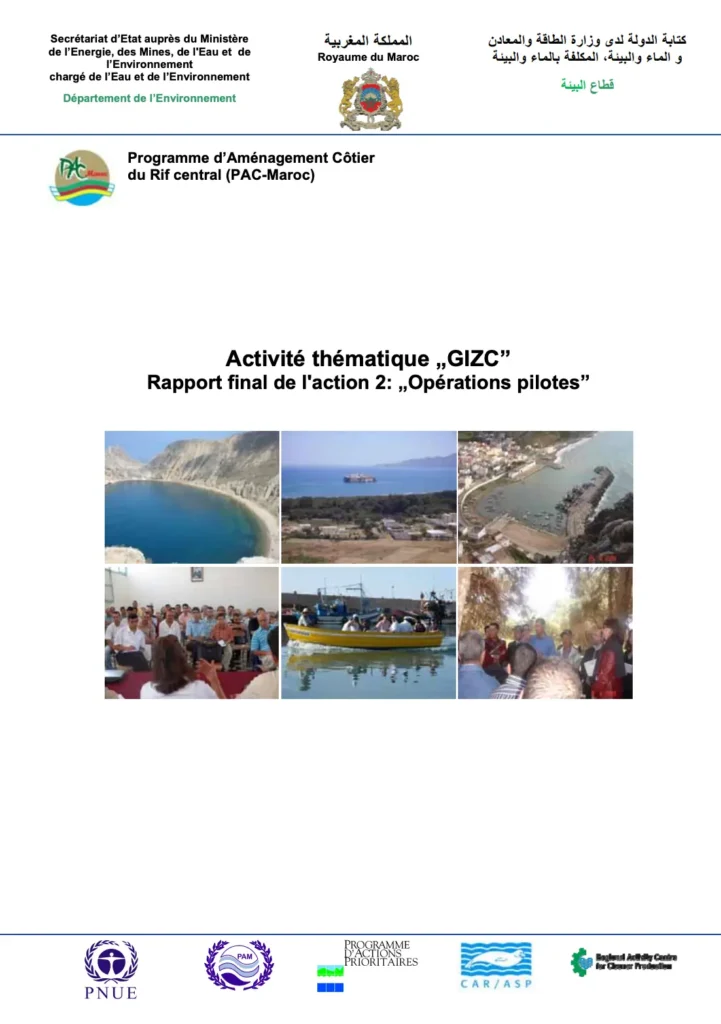
The main results of the CAMP Morocco are the ICZM and SD Strategy, including bankable project sheets, two pilot actions (Jebha in the province of Chefchaouen and Souani in the province of Al Hoceïma), an MSPA file (for the Jebha circle and the National Park of Al Hoceïma), a model of a participatory approach, and Geographic Information Systems (GIS) and sustainability indicators to be used by all those who intend to work in the zone of the central Rif.
Key outputs included:
Integrated Coastal Area Management Framework
Development of methodological guidance and strategic recommendations for implementing ICZM in the Central Rif coastal area.
Coastal planning and management tools
Preparation of thematic studies addressing coastal development, environmental protection, spatial planning and climate risks.
Institutional and policy recommendations
Recommendations aimed at improving coordination among national and regional authorities responsible for coastal and environmental management.
Capacity building and stakeholder engagement
Training activities, workshops and participatory processes helped raise awareness of ICZM principles and strengthen collaboration between institutions and local stakeholders.
These results contributed to strengthening integrated coastal governance in Morocco and provided a basis for future coastal planning initiatives, including regional coastal plans and national coastal policy development.
Partnership
Morocco
Government of Morocco
Ministry responsible for Environment
Regional and local authorities in the Central Rif coastal area
UNEP/MAP – Barcelona Convention system
PAP/RAC